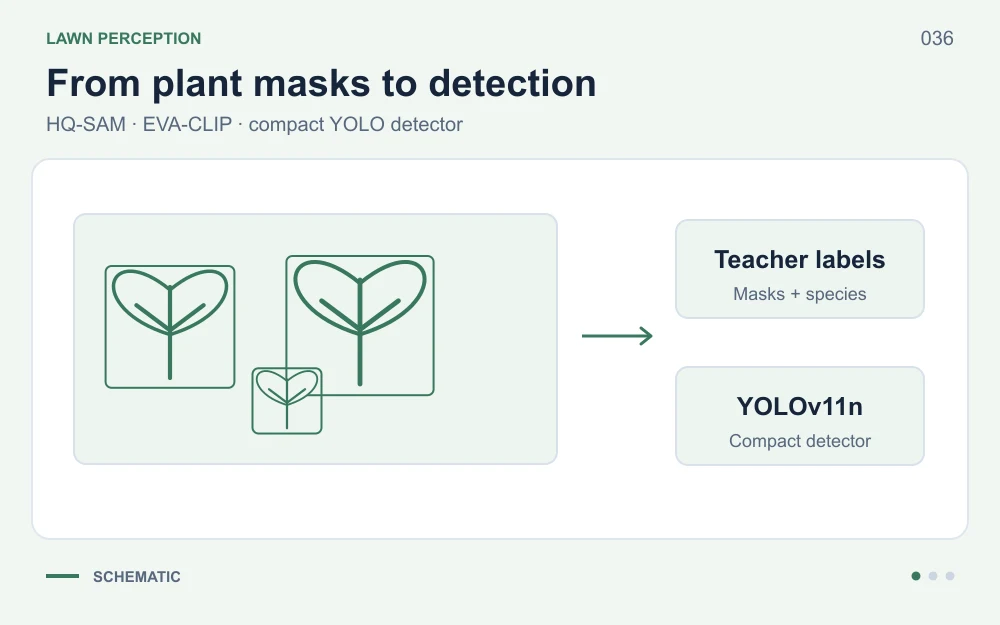
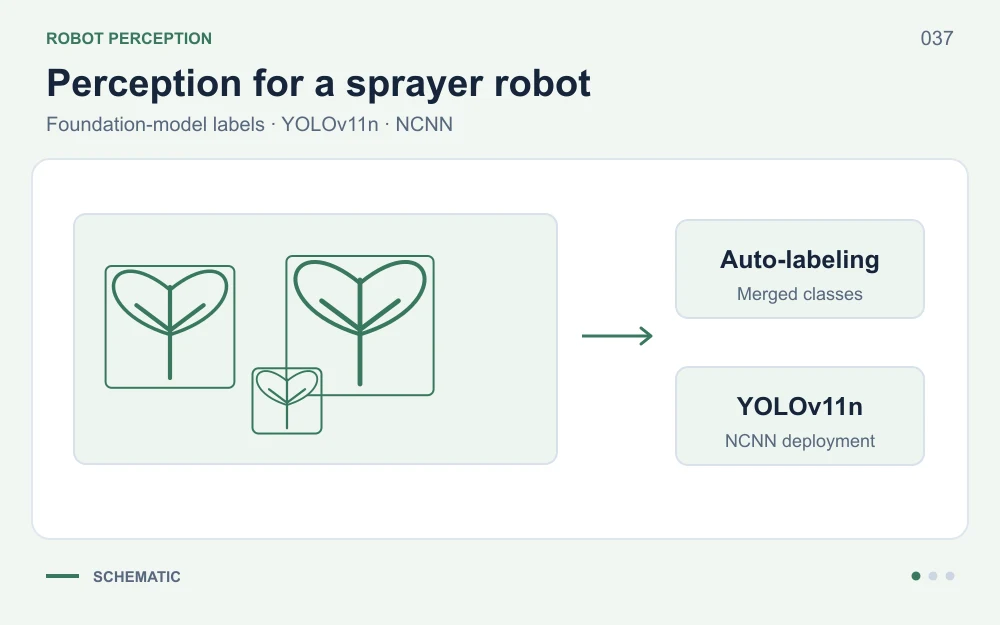
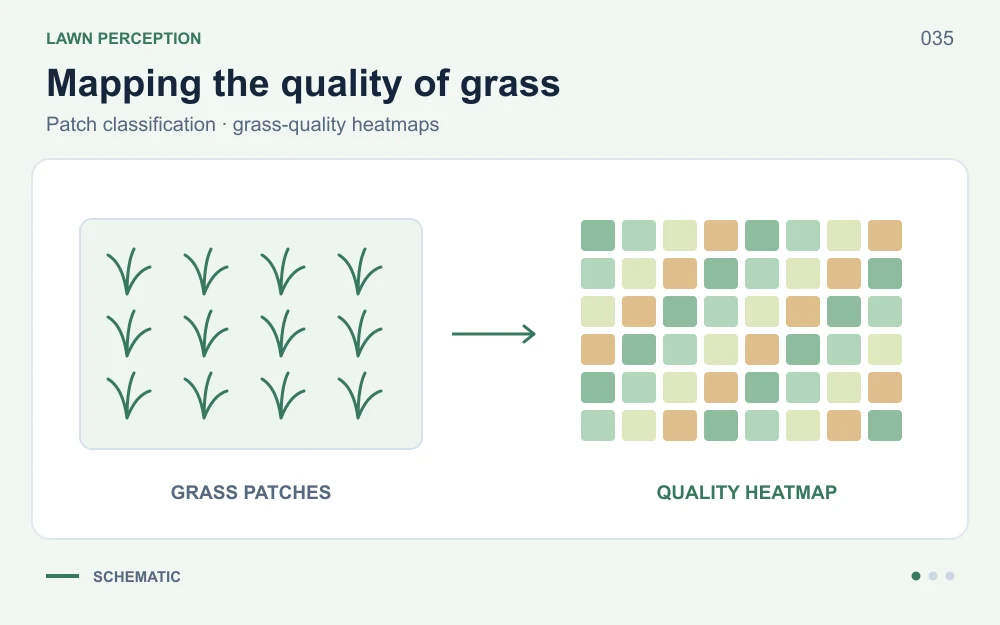
Stereo Matching from Auto-Labeling to Edge Deployment
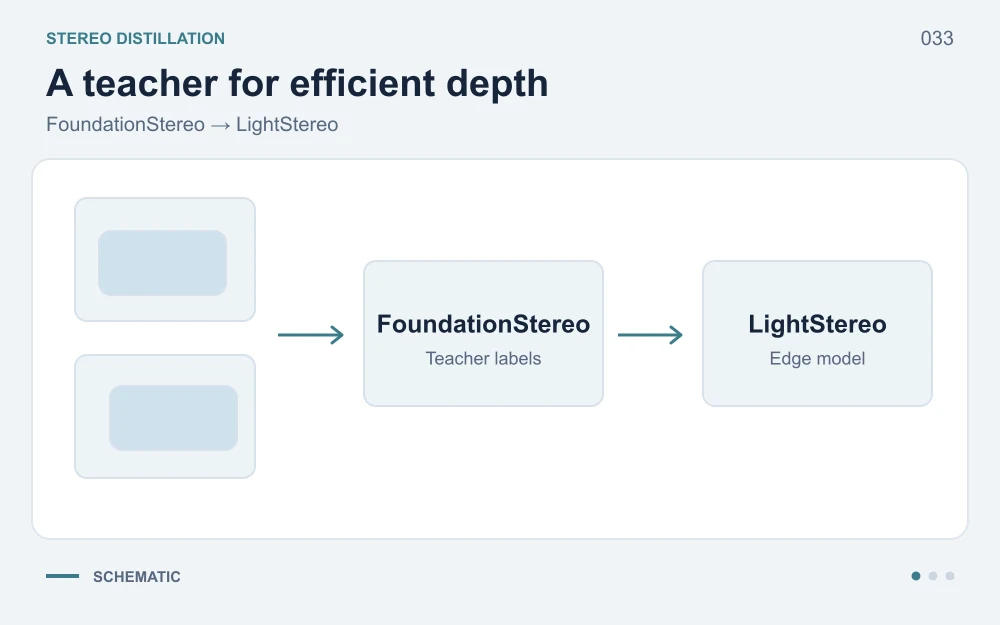
A stereo matching pipeline that uses a large teacher model for auto-labeling and a smaller student model for edge deployment.
Teacher-Student Setup
| Role | Model | Purpose |
|---|---|---|
| Teacher | FoundationStereo | Generate accurate depth maps from stereo image pairs |
| Student | LightStereo | Learn a faster deployable stereo model |
Why This Design
Large stereo models can be too slow for real-time edge devices because of 4D convolutions, cost volumes, and iterative disparity refinement. Using the large model offline creates strong labels, while the smaller model handles deployment. This approach enables automated data labeling and efficient model training and deployment.
Demonstration context
The project media shows this stereo-perception work operating as part of the wider autonomous lawn-care robot.
Evidence & demonstration
Demos & project media
Project demonstration
Loads content from LinkedIn when you choose to play.